The Concerns of a Design System
Successful design systems are built to address the needs of their users. A design system's value isn't measured by its cleverness and elegance, but by whether people actually choose to use it.
Driving Adoption
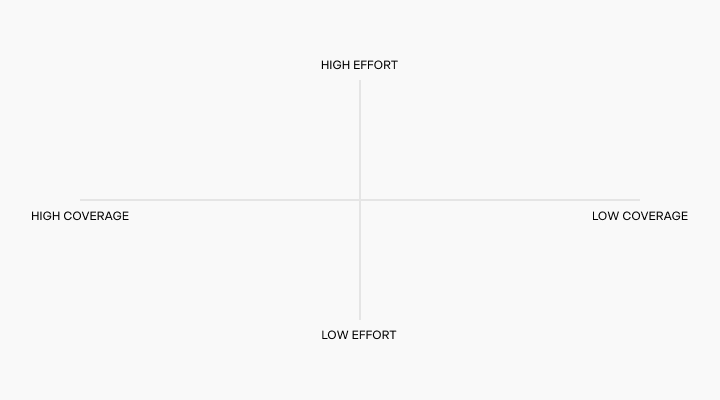
Design system adoption is determined by effort and fit. Effort measures how easy the system is to implement, combining speed of integration and difficulty of use. Fit measures how well the system covers the core use cases and its customizability to adapt to new challenges. Systems with low effort and high fit achieve widespread adoption. Systems that fail on either dimension see teams bypass or abandon them.
-
Designers
As system owners, they build and maintain the core components, patterns, and guidelines that keep products consistent. They deliberate on what gets added or removed and write documentation to help others use the system.
As the consumers of a design system, designers use these established components, patterns and guidelines in their daily work. They benefit from ready-made solutions but also identify gaps and limitations—providing crucial feedback that helps improve the system.
-
Product Managers
Product managers use design systems as a shared language between design and engineering. Design systems give PMs a concrete set of possibilities and constraints, making it easier to shape solutions that are both feasible for engineering and consistent with the design vision.
-
Engineers
Engineers interact with design systems primarily through code—using pre-built components, tokens, and utilities that translate design decisions into functional UI elements. Instead of building buttons, inputs, or navigation patterns from scratch, they import standardized components from a shared library, ensuring consistency while significantly reducing development time.